Last updated November 18, 2026


Free written scope consultation - allowances, timeline, and change-order rules on paper before a single trade is scheduled
Driveway & Pavers Troubleshooting in Denton: Common Problems and How to Fix Them
If your pavers are rocking in the same spot where your sprinklers hit, you don’t have a paver problem. You have a drainage and bedding sand erosion problem, and sealing the surface will make it worse, not better. That’s the part most troubleshooting advice skips. Homeowners in Denton see a loose paver, buy a bucket of sand, dump it in the joint, and book the same repair again next spring because nothing was done about the water moving underneath. This guide is written to help you read your driveway the way a contractor does: figure out which of three failures is actually happening, and match the fix to the cause instead of the symptom. By the end you’ll know when a repair is a Saturday project and when it’s a base rebuild.
Quick Answer
Most driveway paver problems in Denton come down to one of three root causes: base failure from poor compaction or soft soil, bedding sand migration from water moving under the pavers, or edge restraint failure that lets the whole field spread outward. Surface fixes like re-sanding or sealing only hold when the base is still sound. If pavers rock, sink, or lift repeatedly in the same area, the repair has to start below the surface or it won’t last.
Styles & brands we work with
- Kitchen remodeling
- Bathroom remodeling
- Home additions & ADU
- Roofing
- Windows & doors
- Driveway & pavers
- Fence
Table of Contents
- How Do You Diagnose a Paver Problem Before You Fix It?
- Is It Base Failure, Bedding Sand Migration, or Edge Restraint Failure?
- Why Does Joint Sand Keep Washing Out?
- What Causes Paver Pop-Up and Corner Lift?
- What Is the White Haze on Concrete Pavers?
- Re-Leveling vs. Full Reinstall: Which Is the Honest Answer?
- How Does Drainage Change the Whole Repair?
- Why Paver Selection Matters in Denton’s Clay Soil
How Do You Diagnose a Paver Problem Before You Fix It?
Start by walking the driveway barefoot or in thin-soled shoes and paying attention to what your feet feel, not what your eyes see. Visually, a sunken paver and a lifted paver look almost identical in photos. Underfoot, they feel completely different, and that difference tells you where the failure lives.
Here’s a diagnostic sequence that works on any paver driveway in Denton, whether it’s twelve months old or twenty years old:
- Walk the perimeter first. Check the edge row along the grass, the curb, and the garage apron. If the outer pavers are spreading or leaning outward, the edge restraint has failed and everything behind it is slowly loosening.
- Press down on each rocking paver with your heel. If it moves vertically but the surrounding pavers don’t, you’re standing on a localized bedding failure. If a whole cluster moves together, suspect the base beneath the cluster.
- Look at the joints after rain. Sand that disappears in the same low spots every time points to water running under the surface, not over it.
- Note where the sprinkler heads land. Irrigation hitting the same pavers for years is one of the most common causes of sand erosion we see, and it’s easy to correct once you know.
- Check for tree roots and soil movement. A live oak or pecan close to the driveway changes the repair approach entirely, and so does the expansive clay that runs through much of Denton.
Write down what you find. A contractor will ask exactly these questions, and being able to describe the pattern in plain language speeds up the estimate and helps you compare bids honestly. If you want a broader view of how installation choices affect long-term performance, our driveway & pavers page walks through base prep and material selection from the ground up.
What Causes Paver Sinkage and Rocking in Denton?
Paver sinkage and rocking in Denton usually traces back to the base layer, not the pavers themselves. A paver is only as stable as the compacted aggregate underneath it. When that base is under-compacted, too thin, or laid over soft or expansive soil, the surface will move no matter how well the pavers are set.
The three failures below look the same from the surface and get fixed three different ways. Getting this distinction right is the difference between a repair that holds and a repair you repeat every eighteen months.
Base Failure
Base failure means the compacted aggregate under the bedding sand has lost its structural integrity. Symptoms include widespread settling, an entire area of the driveway dropping relative to the rest, and pavers that move in groups rather than individually. In Denton, base failure often shows up along the transition from garage apron to driveway, where water concentrates and where builders sometimes compact less carefully. It also shows up over clay soil that expands and contracts seasonally, testing soil conditions that most driveways were designed for. Repairing base failure means lifting the pavers, removing and replacing the failed aggregate, re-compacting in lifts, and resetting. Surface work won’t touch it.
Bedding Sand Migration
Bedding sand is the roughly one-inch layer between the compacted base and the pavers. It helps level the pavers and locks the joint sand. When water gets underneath and flows laterally, it can wash bedding sand out of the field, leaving a void the pavers settle into. Symptoms are localized depressions, often in a line downhill from where water enters, and joints that empty quickly after rain. Fixes range from spot re-bedding to a full reset if the scour is extensive. Correcting the water source, whether that’s a downspout, a sprinkler head, or a poorly graded edge, is the non-negotiable part of the repair.
Edge Restraint Failure
The edge restraint is the concrete or plastic curb that holds the outer paver row in place. It absorbs the lateral force of the field and keeps the joints tight. When it fails, cracks, or was never pinned deep enough, the pavers push outward, joints widen, and the whole field starts to loosen from the outside in. This is one of the most common reasons pavers “suddenly start moving” after years of stability. The fix is to reset the edge with proper concrete restraint or a new pinned edge system, then re-tighten the field and re-sand the joints. In our experience, homeowners often fix the pavers and skip the edge, which is why the problem returns.
Why Does Joint Sand Keep Washing Out?
Joint sand keeps washing out because water is entering the joint faster than the sand can stay put, and that usually means the wrong sand was used or the drainage is sending water into the pavement instead of away from it. Joint sand is not a cosmetic filler. It’s the friction that locks each paver against its neighbors.
Regular sand, sometimes called mortar sand or masonry sand, is cheap and doesn’t hold. In Denton’s heat it dries, loosens, and washes out with the first good rain. Polymeric sand is designed to harden into the joint and stay there. But not all polymeric sand is the same, and this is where most homeowner-led repairs go wrong.
For Texas conditions, we spec joint sand that’s engineered to cure in heat without crusting over before it sets. Techniseal’s polymeric lines and Alliance Gator’s Gator Maxx are two systems we rely on because they’re formulated for hot, dry curing, and they hold up under the intense sun we get through summer. On a Texas driveway, a sand designed for cooler climates may cure too fast to properly compact into the joints, or it may dry before you’ve had a chance to work it in. Selecting the right product is half the repair.
Installation matters as much as the product:
- Sweep the sand into the joints completely, working it in both directions.
- Compact the pavers with a rubber pad plate compactor to drive the sand deeper and vibrate it into voids.
- Top off the joints a second time and re-compact.
- Sweep all excess off the surface and wait for the manufacturer’s recommended cure window before water touches it. This is usually the step that gets rushed.
And check drainage before you re-sand. If water is pooling against the driveway or a downspout is dumping into the edge, you’ll be re-sanding again. Paver driveways that drain correctly rarely lose joint sand faster than they should. If you’re seeing sand loss every season, that’s a drainage signal, not a product signal.
What Causes Paver Pop-Up and Corner Lift?
Paver pop-up and corner lift are caused by something pushing from below, and the two most common culprits in Denton are tree root intrusion and expansive clay soil heave. The approach to each is completely different, which is why sighting the cause before you lift a single paver matters.
Tree Root Intrusion
Live oaks, pecans, and large elms all push surface roots laterally beneath pavement. When a root lifts a paver, you’ll typically see a single paver or a small cluster angled up, often with a visible crack in the adjacent joint. The lift tends to follow a line, following the root’s path. Roots can also pry up the edge restraint, which loosens the whole field. The repair usually involves lifting the affected pavers, cutting the root back at the proper distance from the tree, re-bedding, and in some cases installing a root barrier along the edge of the driveway. Root pruning around established trees needs care. Cutting back too aggressively can destabilize the tree or harm it. This is one job where you want someone with experience to handle the excavation, especially if the tree matters to you.
Clay Soil Heave
The blackland clay that runs through much of Denton expands and contracts substantially with seasonal moisture. In a wet spring it swells, and in a dry summer it shrinks and cracks. A paver set over clay with a base that doesn’t isolate the movement will lift or settle along with the soil. This kind of movement shows up as scattered, uneven wobbles across a wide area rather than a single clean lift. Repair is more involved: it usually requires removing the affected pavers, excavating down, and installing a properly thick compacted base that bridges the clay’s movement. Getting that thickness right is critical in Denton, and it’s why skimping on base depth is false economy here. It also explains why two driveways built with the same pavers can perform completely differently depending on what’s under the surface.
In short: a single isolated lift is often a root. Widespread uneven movement over a wide area is likely soil movement. The fix for one rarely fixes the other.
What Is the White Haze on Concrete Pavers?
The white haze on concrete pavers is efflorescence, a natural salt deposit that migrates to the surface as the concrete dries, and in Denton it’s common because our water carries dissolved minerals and our climate drives a lot of wet-dry cycling. It’s harmless, and it’s cosmetic. Left alone, efflorescence often works itself out over a season or two. When it doesn’t, or when it’s heavy, it can be cleaned.
What matters more is how you clean it. The wrong cleaner can etch the surface of a concrete paver permanently, and that etch can’t be polished out.
Safe approaches:
- Start with a stiff brush and clean water. A surprising amount of efflorescence comes off with a scrub and water alone.
- Use a cleaner formulated for efflorescence, not acid. An efflorescence remover formulated for concrete pavers will dissolve the salts without eating the cement binder. Follow the dilution ratio on the bottle. Stronger is not better.
- Test in an inconspicuous area first. Always. A small corner near a planting bed tells you more than any bottle label.
- Seal only after the efflorescence has cleared. Sealing over efflorescence traps the salts underneath and makes the next cleaning twice as hard.
Muriatic acid and generic concrete etch products are tempting and dangerous on colored pavers. They can strip the color. They can also damage the joint sand and the environment around the driveway. For efflorescence that keeps returning, the underlying issue may be water moving through the pavers. Once the source is addressed, the efflorescence usually stops. For paver selection that’s engineered for our local conditions, the brands we work with include Tremron and Techo-Bloc, both of which make lines rated for freeze-sensitive and hot-weather climates.
Re-Leveling vs. Full Reinstall: Which Is the Honest Answer?
Re-leveling is the right call when the base is sound and the movement is confined to the bedding layer, edge restraint, or joint sand. Full removal and reinstall is the only honest answer when the base itself has failed, when the subgrade is unsuitable, or when movement covers a large area. Homeowners understandably want to hear “re-level,” but a contractor who tells you that when the base is gone will be back in two years with the same problem.
Here’s how we decide, and how you can sanity-check any bid you get:
- Lift a small sample area to inspect the base. If the aggregate under the bedding sand is loose, powdery, or mixed with soil, re-leveling won’t fix anything. That base needs replacement.
- Measure the area of movement. A few pavers can usually be spot-repaired. If more than roughly half of a bay is moving, replacement of the base in that bay is the realistic answer.
- Check the edge condition. If the edge is failing, that alone makes a re-level insufficient. Fix the edge and re-tighten the field, or replace the field.
- Check subgrade conditions. If there’s expansive clay, poor drainage, or organic matter under the base, an overlay repair is a temporary patch.
- Look at grading. A driveway that pitches toward the garage or a low corner needs a grading correction. If that can’t be done without removing the pavers, that tells you the answer.
In our experience, homeowners respond well to a straight answer when it’s paired with clear reasoning. Ask any contractor to show you what they found when they lifted the sample. If they can’t, get another bid. The honest answer, even when it’s the more expensive one, will save you money over the life of the driveway.
If the whole driveway is past saving, replacing it is a chance to correct the grading, upgrade the base, and choose pavers designed for our soil and heat. Our team at Construction Denton can walk you through the trade-offs between repair and replacement during a free estimate.
How Does Drainage Change the Whole Repair?
Drainage changes the repair because almost every paver failure traces back to water doing something it shouldn’t, and any repair that doesn’t change the water flow will fail. Water is patient. It finds the path of least resistance under the driveway, and once it starts moving bedding sand, it keeps moving it.
Before any repair, walk the water. Where does it enter, where does it pool, and where does it leave?
- Downspouts: A downspout dumping onto the driveway edge is a frequent cause of edge and bedding erosion. Extend it away from the pavement, or route it into a planted swale if the grade allows.
- Sprinklers: Overspray that lands on the same pavers day after day washes joint sand out and can undermine the bedding. Adjust or replace the heads and cut run times on the zones that hit the driveway.
- Grade and pitch: Dirt and mulch beds that sit higher than the pavement push water onto it. Grade should fall away from the driveway, not into it.
- Flow direction: A driveway that flattens out or reverses pitch collects water in the middle rather than shedding it to the street or a drainage area. This needs a grading correction, not a surface repair.
On Denton lots with heavy clay soil, water doesn’t soak in quickly, so sheet flow matters more than infiltration. The driveway needs to shed water fast. A base that’s properly compacted and graded, with tight joints and a solid edge, does that. A driveway that has been re-sanded without fixing the drainage will keep losing sand, and no product will change that. Fix the water, then fix the pavers.
Why Paver Selection Matters in Denton’s Clay Soil
Paver selection matters in Denton because our ground moves, and the pavers plus the base have to work as a system that tolerates that movement. A paver that’s right for a sandy coastal lot can perform differently over expansive clay. What you want is a paver with consistent thickness, a high compressive strength rating, and a manufacturer that publishes those ratings clearly. That’s the practical difference between a paver brand that’s engineered for tough local conditions and one that isn’t.
We work with a range of commercial-grade paver lines because material choice is part of the fix, not an afterthought. Tremron, Techo-Bloc, and Cambridge Pavers all publish strength and absorption specifications, and all have lines suited to Texas heat and movement-prone subgrade. Unilock systems bring a range of edge restraints and base systems designed to work together.
Within those lines, the decision usually comes down to three things:
- Thickness: Driveways need heavier pavers than patios. A paver rated for a driveway will typically be thicker than a patio paver.
- Color and finish: Darker pavers absorb heat, and in Denton summers they can get genuinely hot underfoot. Lighter colors and finishes stay cooler and show efflorescence less.
- Edge restraint compatibility: The manufacturer’s restraint system matters as much as the pavers, so spec them together rather than mixing brands and hoping it works.
If you’re re-doing a driveway, ask for the written specs on the pavers and the base thickness. If your project involves tying the driveway into other exterior work, we can help coordinate it across the trades, from a new fence installation to grading and landscape edging, so the whole exterior reads as one finished job. For additions that change the driveway apron or approach, our home additions & ADU team coordinates with the exterior scope so nothing gets left with a seam in the wrong place.
Common Mistakes to Avoid
- Re-sanding without fixing the water. If you haven’t diagnosed where water is entering, you’ll be back to sweeping sand in the same joints next season. Fix the drainage first.
- Sealing to hide joint sand loss. Sealing locks in whatever’s underneath, and if the joints are already hollow, the sealant has nothing to bond to. Seal only after the joints are properly filled and cured.
- Skipping the edge inspection. Edge restraint is where most paver movement begins. If the outer row is loose and you repair the middle, the field will loosen again from the outside in.
- Using regular masonry sand in the joints. It’s cheap and it doesn’t hold. In Denton heat, polymeric sand formulated for hot climates is the right product, not the cheapest bag on the shelf.
- Underestimating the base. A paver driveway over clay soil needs a proper compacted aggregate base of the right thickness. Cutting corners here is the single most expensive shortcut on a driveway, because you pay to do the job twice.
- Cutting tree roots too aggressively. A root that lifts a paver can often be pruned safely, but the wrong cut damages the tree or destabilizes it. Get a professional involved before you go at it with a saw.
- Cleaning efflorescence with acid. Acid can etch concrete pavers and strip color permanently. Use a product formulated for efflorescence and test it in a hidden corner first.
See the difference
 Before
 After
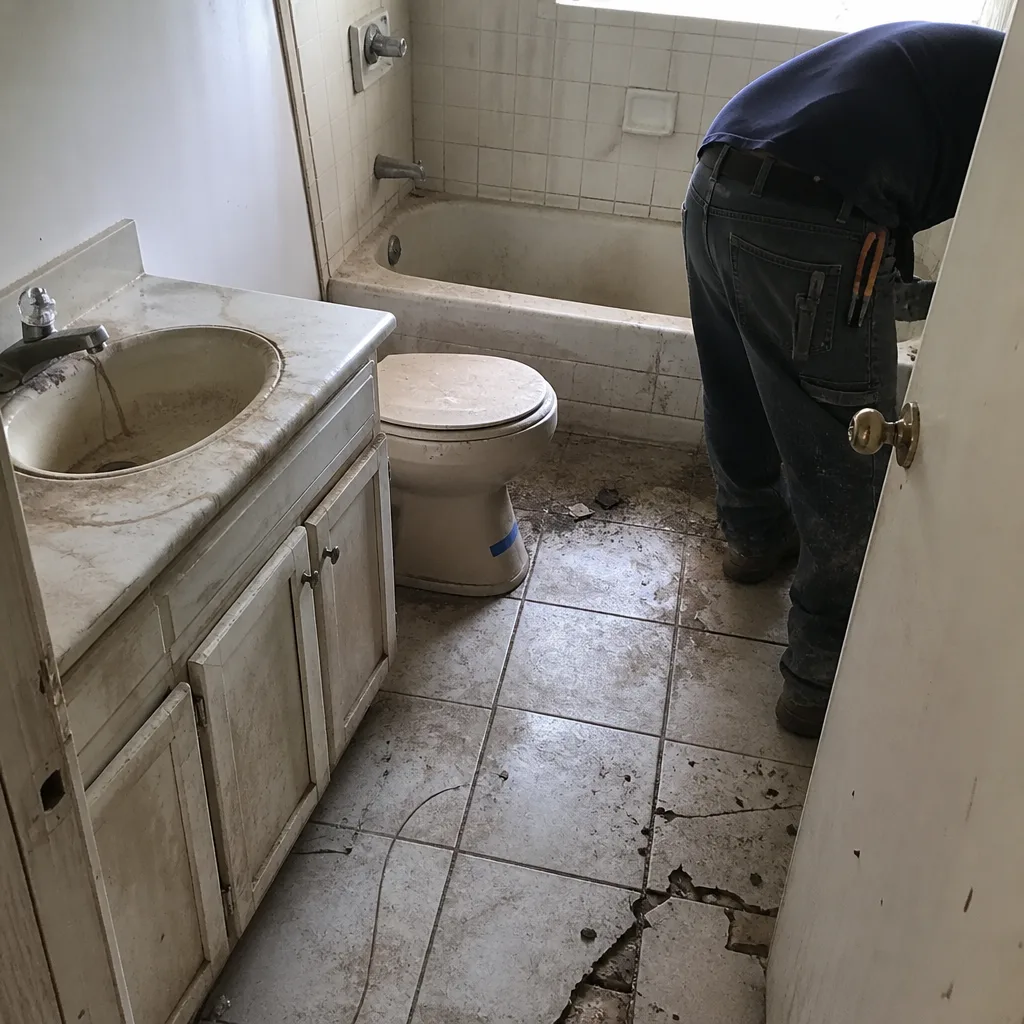 Before
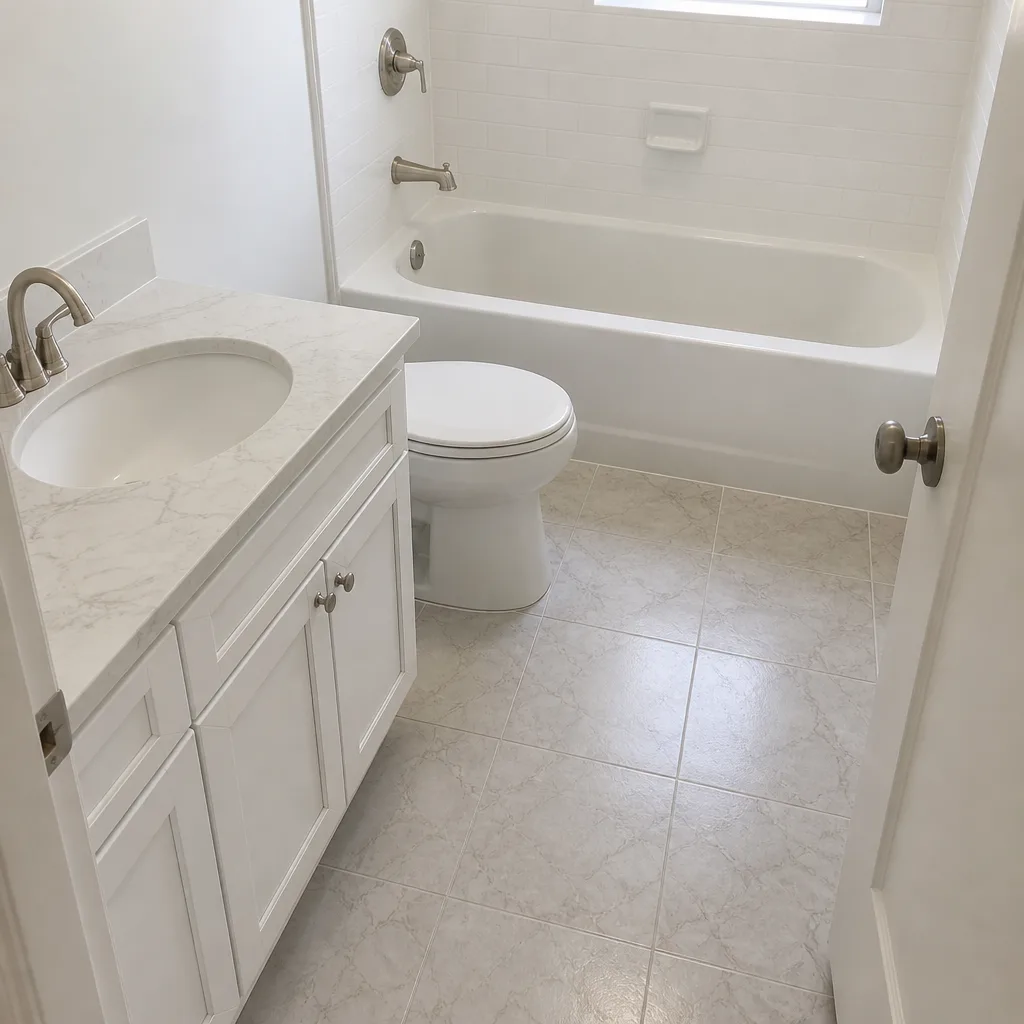 After
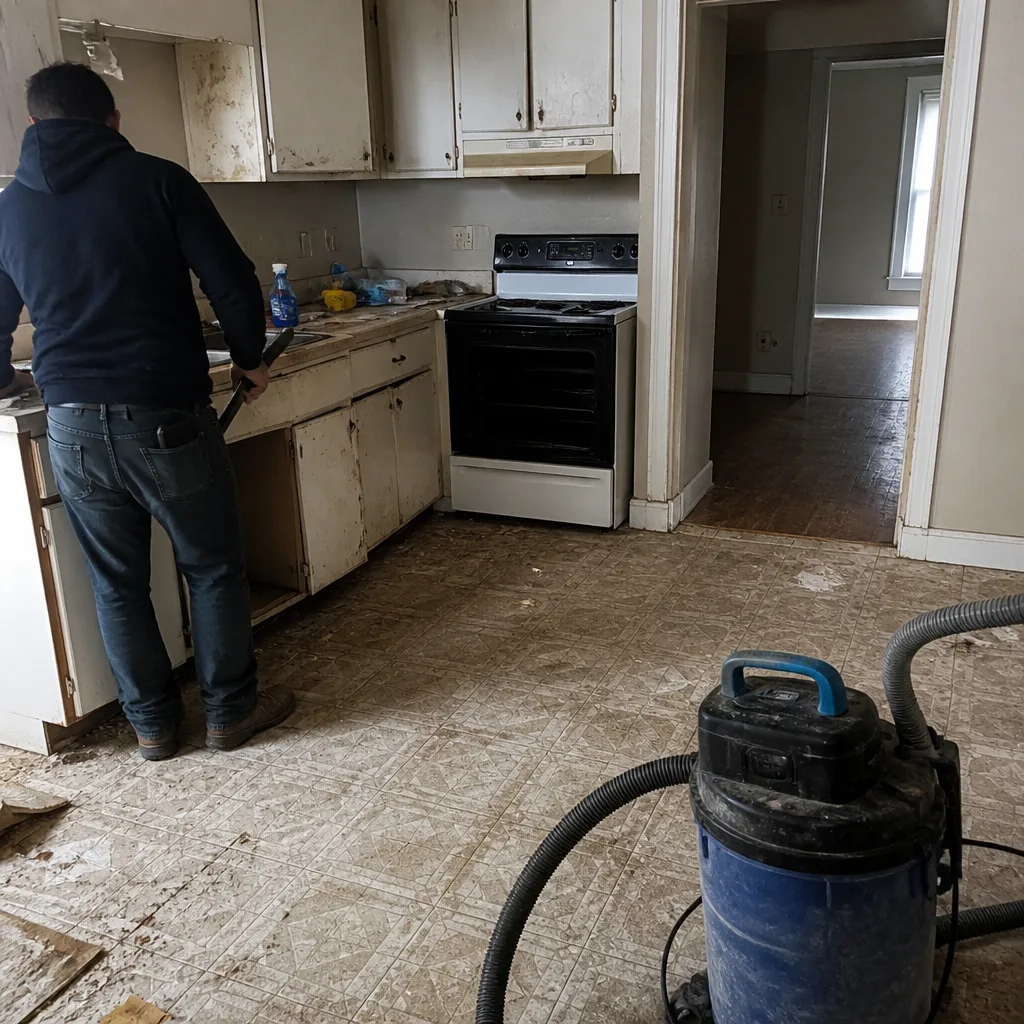 Before
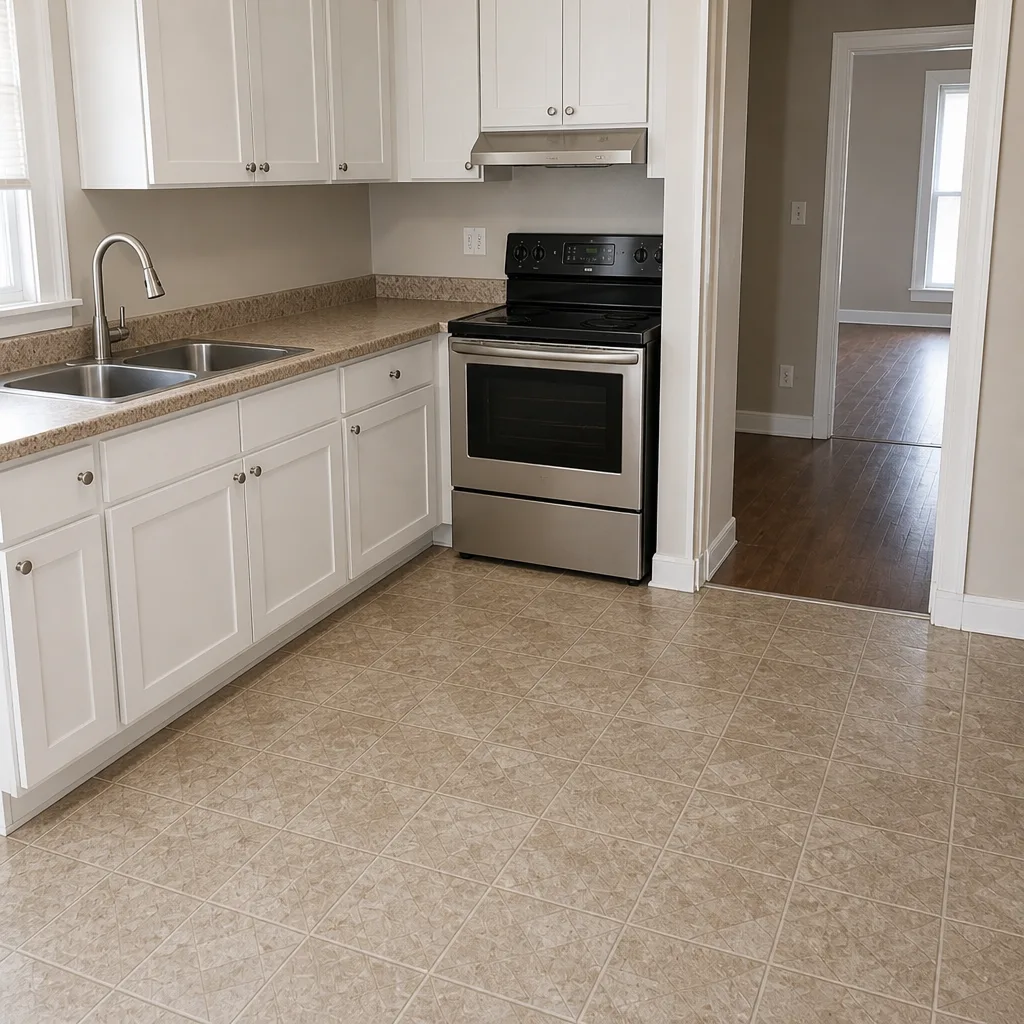 After
When to Call a Professional
Call a professional when pavers rock in more than a small cluster, when the edge is spreading, when the surface has failed in the same spot twice despite repairs, or when you can see movement tied to a tree or the seasonal behavior of clay soil. Call sooner if a driveway pitches toward your garage or foundation and you’re worried about water entering the structure, which is a drainage problem in disguise. If the pavers are wobbling underfoot, don’t reseal – you’ll trap the water and make the fix harder. Our technicians have up to 9 years of experience diagnosing which failure layer you’re actually dealing with, and a free estimate includes a walk-through and a written line-item quote. Construction Denton offers free estimates in Denton, and that first conversation is the cheapest thing you’ll ever do on a driveway, because it’s what keeps you from paying for the same repair twice. Call (855) 720-1779. We answer 24/7. Fast dispatch from 7am to 7pm, Sunday through Friday.
Frequently Asked Questions
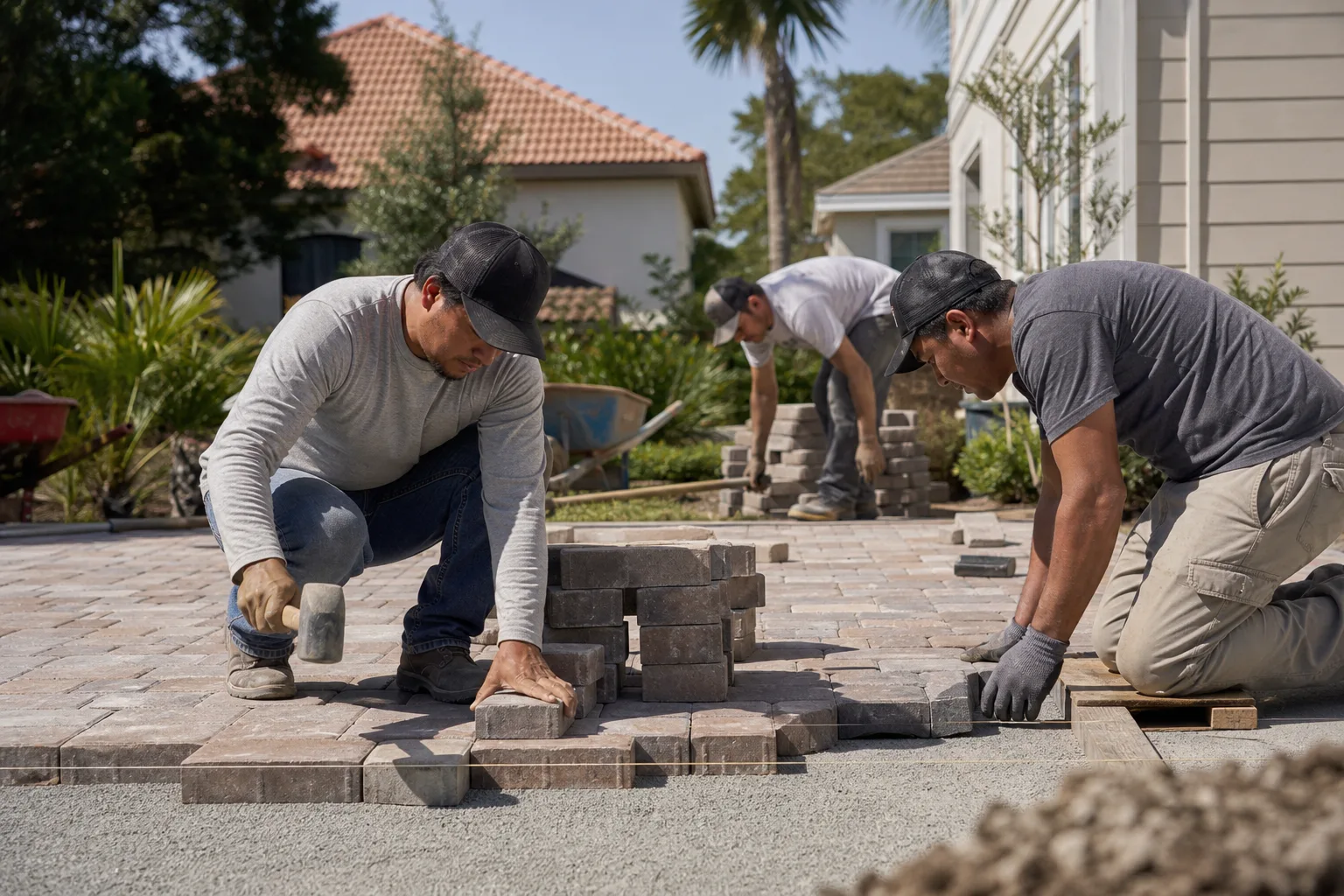
Most paver driveway repairs in Denton run anywhere from a few hundred dollars for a spot repair to many times that if the base needs to be rebuilt. Spot repairs involving a handful of pavers, re-sanding, and resetting the edge stay at the low end. Base replacement over a large area, or a full reinstall, is the other end of the range. Pricing is always set per job based on the written estimate, and a written estimate is the only number that counts. Call (855) 720-1779 to schedule a free estimate – there is no charge for that visit.
They will if the repair fixes symptoms without addressing the cause. If a crew lifts the paver and re-beds it without checking the base and drainage, that paver will settle again. The right repair identifies why that spot failed in the first place – a downspout, a sprinkler head, a bad base, a tree root – and corrects that. When the cause is addressed, the repair holds. When it isn’t, you’ll see the same paver rocking within about eighteen months, and that’s the classic sign the underlying problem was never diagnosed.
Joint sand keeps washing out because water is entering the joints faster than the sand can stay set, and that’s almost always a drainage or product problem, not a cleaning problem. Regular sand doesn’t hold in Denton heat and rain. Polymeric sand formulated for hot climates is the right fix, but only after you’ve addressed where the water is coming from. A downspout dumping on the edge or an overspraying sprinkler head will wash out any sand, no matter how good the product is.
The white stains are efflorescence, a harmless salt migration that’s very common in Denton because of our water chemistry and the wet-dry cycle we get from spring rains to summer heat. It’s cosmetic and often clears on its own. If it’s heavy, use an efflorescence remover formulated for concrete pavers and test it in a hidden area first. Never use muriatic acid, because it can etch the surface and strip the color permanently. If it keeps coming back, the fix is usually addressing water movement through the pavers.
You can handle small cosmetic fixes: sweeping in sand, replacing a single cracked paver, keeping the joints filled. Lifting a base failure, resetting edge restraint, or diagnosing tree root and clay soil movement is something a contractor should handle, because getting the base and grading wrong means the repair fails and you’ve wasted the afternoon. If a repair involves more than a handful of pavers or any excavation below the bedding sand, get a pro out to take a look. It’s cheaper than doing it twice.
Spot repairs, where you’re fixing a few pavers and re-sanding joints, can often be done in a single visit. Rebuilding a section of base or resetting an edge usually takes a bit longer because the new aggregate has to be brought up in lifts and properly compacted. A full driveway reinstall is a multi-day project from removal through re-sanding and cure time. Your written estimate should state the expected duration. Call (855) 720-1779 to get that estimate scheduled – the visit is free, and we’ll give you a clear timeline along with the price.
The Bottom Line
Rocking pavers, empty joints, and creeping edges are symptoms. The real failure is almost always underneath, in the base, the bedding sand, or the edge restraint, and the right repair depends on knowing which one. Fix the water first, diagnose the movement layer before you lift a single paver, and match your repair to the cause instead of the surface. Joint sand choice matters in Texas heat, and efflorescence needs the right cleaner. When in doubt, don’t cover the problem with sealant – understand it. That diagnosis is what saves you from a repair that comes back. Construction Denton works across every phase of the exterior, from pavers to fence to roofline, and can help you figure out which repair you’re actually looking at. Call (855) 720-1779 for a free estimate. We answer 24/7. Fast dispatch from 7am to 7pm, Sunday through Friday.
Written by the team at Construction Denton.